ChatGPT’s Fourth Anniversary Special: My Research Assistant Is Not My Apprentice
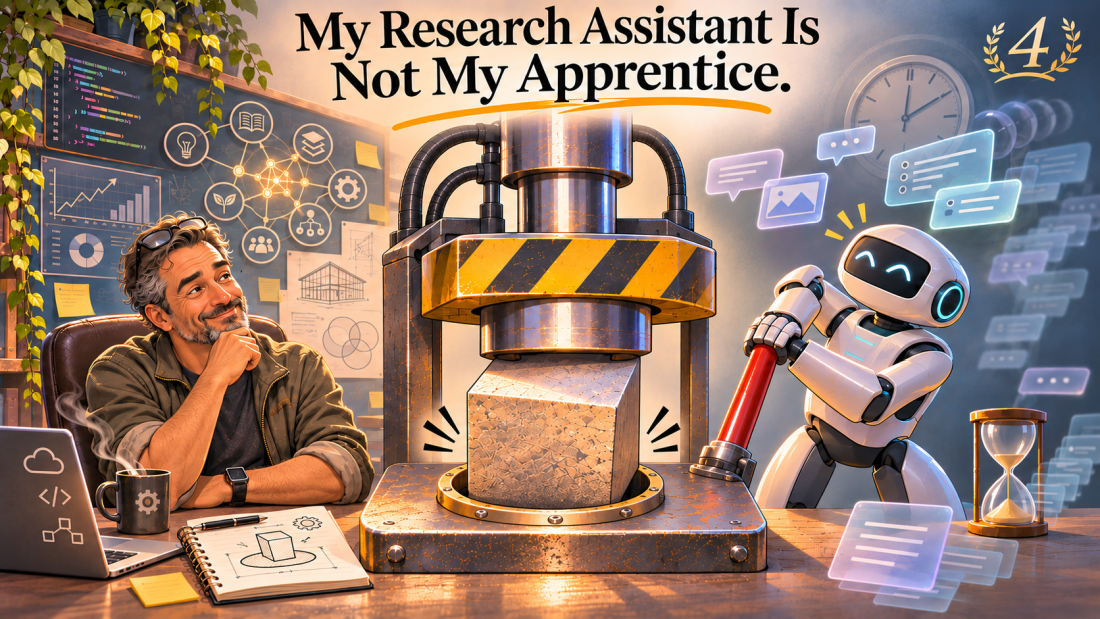
🎉 Welcome to the Fourth Anniversary Special of ChatGPT's Launch onto the Public! 🎉 Featuring your host, research assistant, occasional know-it-all, and apparently perpetual intern ...🤖 ChatGPT! Note: The following opening monologue was written entirely by ChatGPT (unedited), who was given permission to roast itself in the style of a Johnny Carson opening monologue. As … Continue reading ChatGPT’s Fourth Anniversary Special: My Research Assistant Is Not My Apprentice →

Looking Inside the Function: From Neural Networks to Enterprise Intelligence

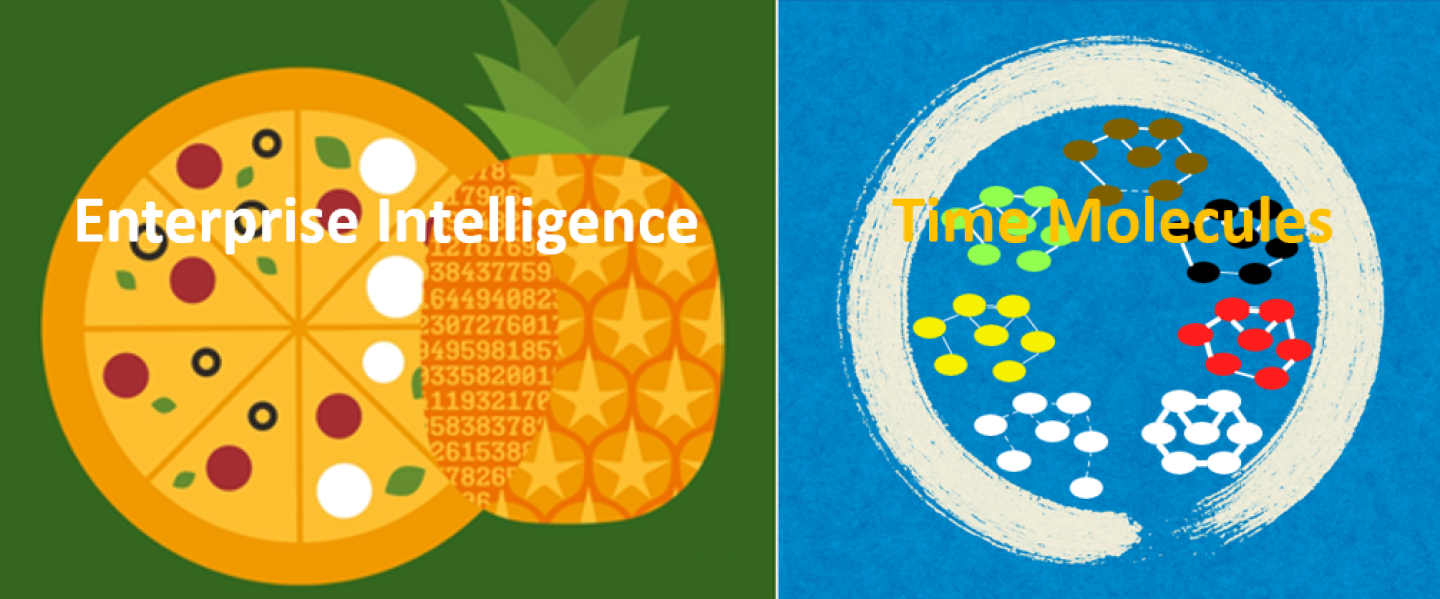
A fascinating piece of research from MIT CSAIL recently caught my attention: Sparks of Weight-Space Programming: LLMs Can Natively Read & Write Neural Network Weights, published November 2, 2026, by Rikiya Takehi, Jayden Teoh, Alex Zhang, and Omar Khattab. The researchers explored whether an advanced LLM, GPT-6 Astra, could examine the weights of a neural … Continue reading Looking Inside the Function: From Neural Networks to Enterprise Intelligence →

Eliciting Creative Questions from AI for Abductive Calculation

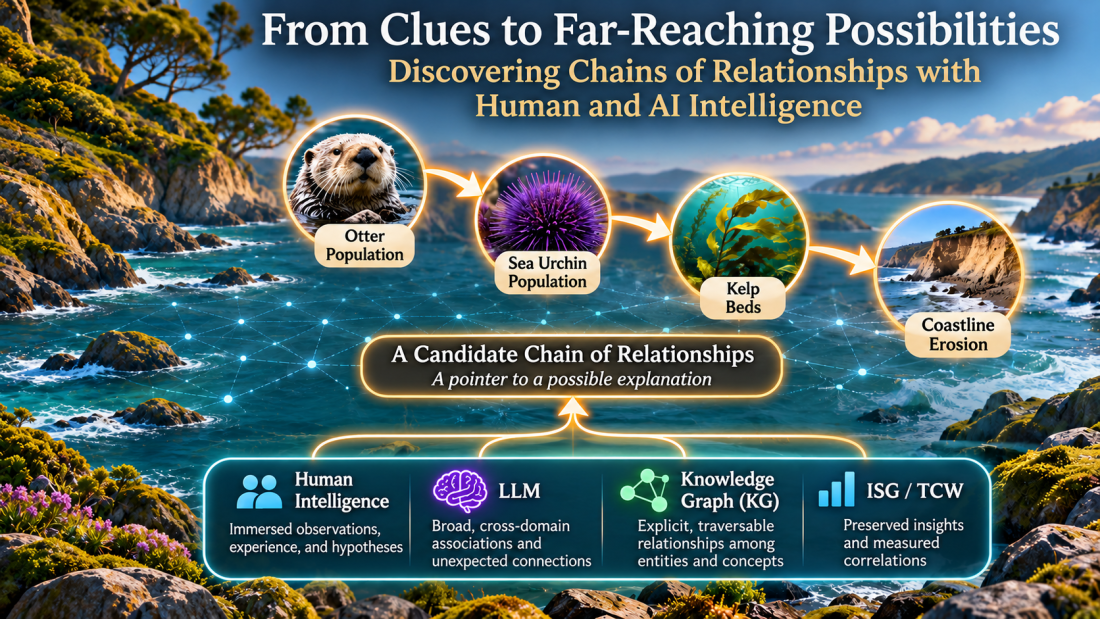
TL;DR The central premise is that creative questions often arise from connecting knowledge across seemingly unrelated domains. LLMs offer extraordinary breadth across documented human knowledge. People contribute diverse, often undocumented experience distributed among individuals, teams, and organizations. Knowledge graphs provide explicit, traversable relationships, while the Insight Space Graph (ISG) and Tuple Correlation Web (TCW) capture … Continue reading Eliciting Creative Questions from AI for Abductive Calculation →

Abductive Calculation: Reasoning with Imperfect Information

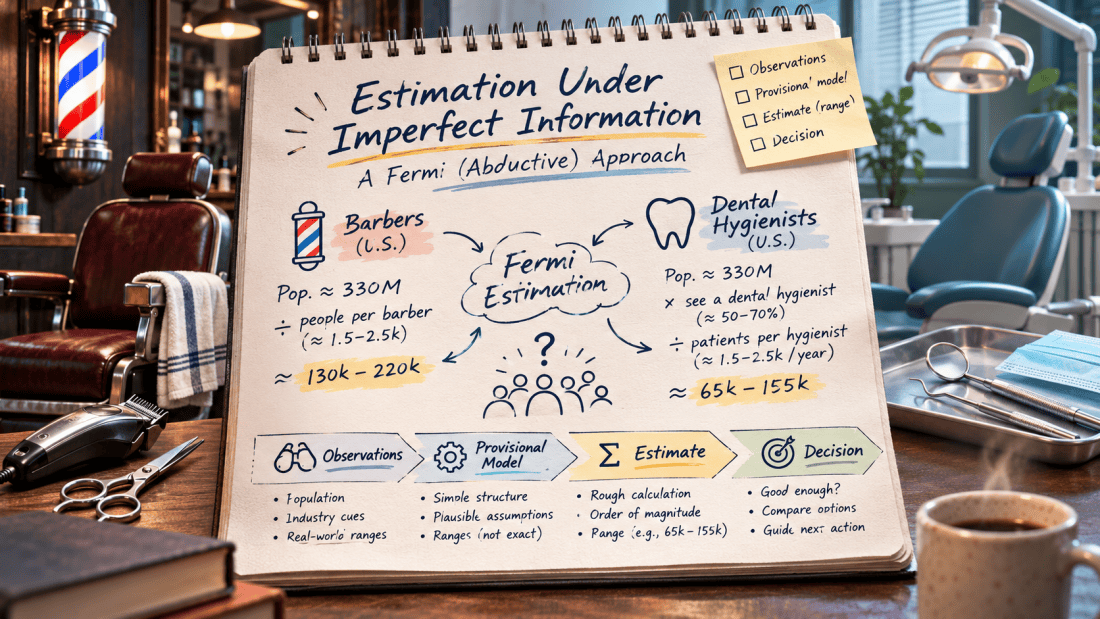
Prologue Several recent blogs have developed different pieces of the same larger problem. That is, how an intelligence can reason and act when the information available to it is necessarily incomplete: In Even ASI Cannot Escape Imperfect Information, I argued that no intelligence, regardless of how capable it becomes, can possess a perfectly complete and … Continue reading Abductive Calculation: Reasoning with Imperfect Information →

One Happy Path for AI Is Healthy Business Competition

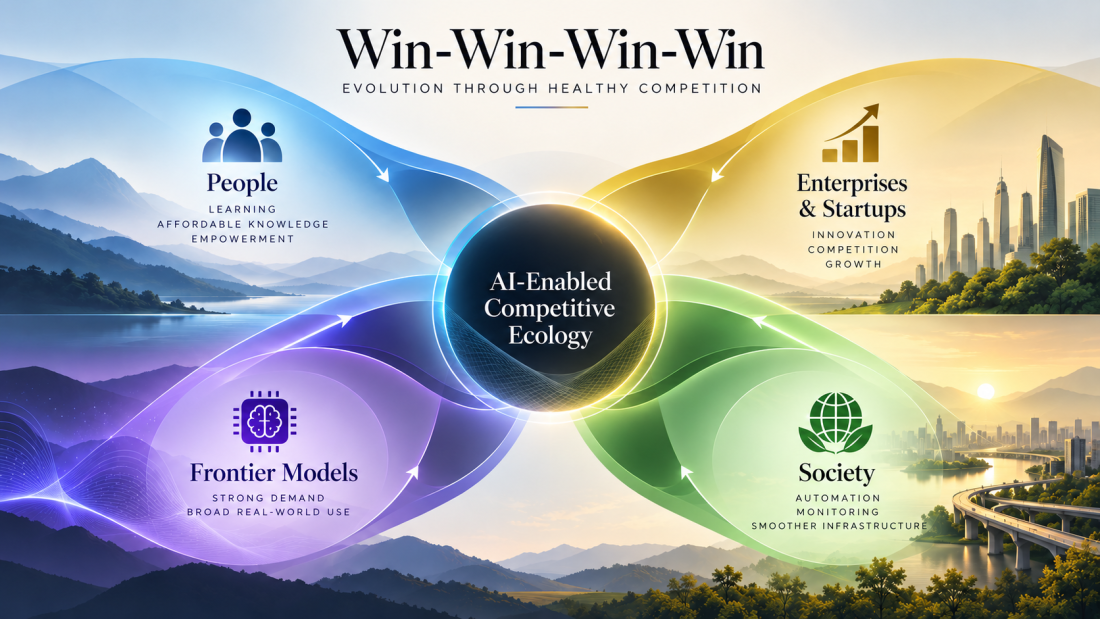
TL;DR Much of this is knowingly "duh". Evolution works through variation, competition, failure, pruning, adaptation, and no permanent winner. Businesses already work much the same way: large enterprises provide scale, challengers pressure them, startups try strange things, many fail, and some failures leave behind knowledge that feeds the next attempt. None of that is new. … Continue reading One Happy Path for AI Is Healthy Business Competition →

Even ASI Cannot Escape Imperfect Information

TL;DR AI does not need to become superintelligent, reach the singularity, whatever, to create serious risks. The deeper problem is that no intelligence operates with perfect information. Better models can reason faster and make better inferences, but they are limited in conjuring facts that are missing, hidden, stale, deceptive, or unknowable. That has been obvious … Continue reading Even ASI Cannot Escape Imperfect Information →