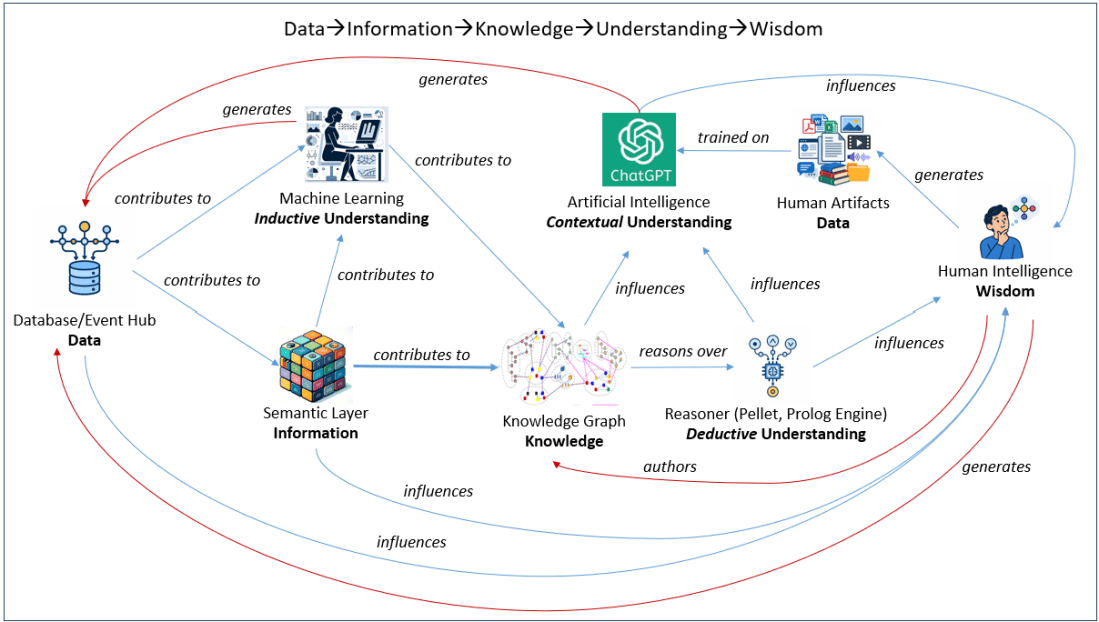
This article is a supplement to my new book, Semantic Webs of Meaning: Building Contextual Knowledge Graphs for Deduction and Integration published by Technics Publications (on Amazon) . This is an extension to the topic, Machine Learning Models as Data Products, on page 173. In that topic, iris.py is an example of a Python program … Continue reading Web of Functions (Transformations)
Category: Kyvos Insights
KPI-First Probing of the Tuple Correlation Web
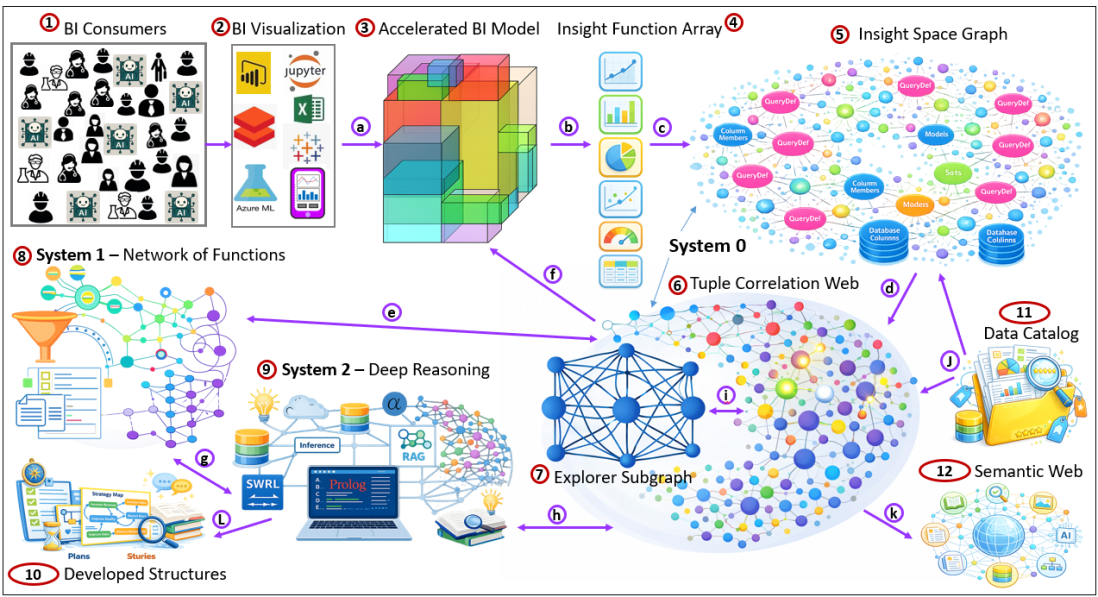
Note: From the “deleted scenes” of my book, Enterprise Intelligence, Technics Publications, 2024. This addresses a layered approach to building a Tuple Correlation Web (TCW), which can be massive in its full, enterprise-scoped manifestation. The TCW is primarily an Enterprise Intelligence structure, but it also belongs within the larger idea of my new book, Semantic Webs of … Continue reading KPI-First Probing of the Tuple Correlation Web
Insight Function Array: How the Insight Space Graph Notices, Remembers, and Connects
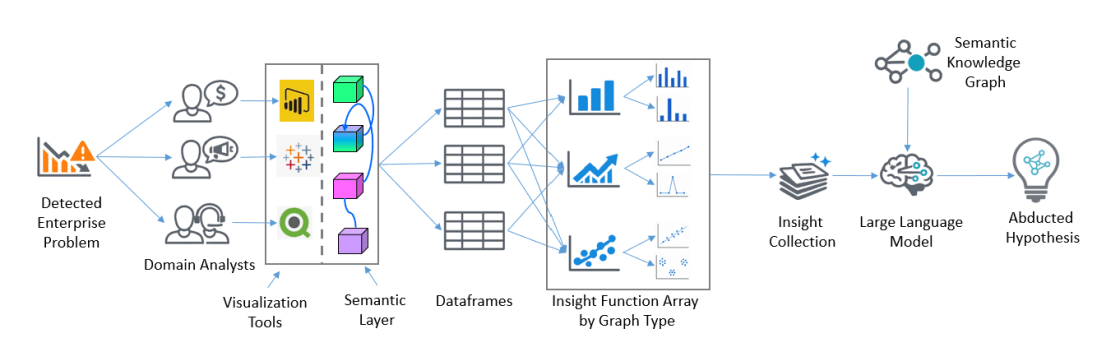
My 2024 book, Enterprise Intelligence, describes the Insight Space Graph (ISG), a graph database that records, maps, and connects the simple insights exposed through the everyday work of Business Intelligence (BI) analysts. Towards the goal of resolving business problems, analysts continually explore enterprise data through tools such as Tableau and Power BI, producing line graphs, … Continue reading Insight Function Array: How the Insight Space Graph Notices, Remembers, and Connects
Chains of Unstable Correlations
Introduction Like it or not, competition is arguably the biggest force affecting how things in our world work, in terms of both evolution and society. Without competition among genes, at the least, life on Earth wouldn't be as it is today. And for better or worse, societal competition at various levels (individual, tribes/cities, countries) wouldn't … Continue reading Chains of Unstable Correlations
Explorer Subgraph—The Dynamic Cartography of Relation Space
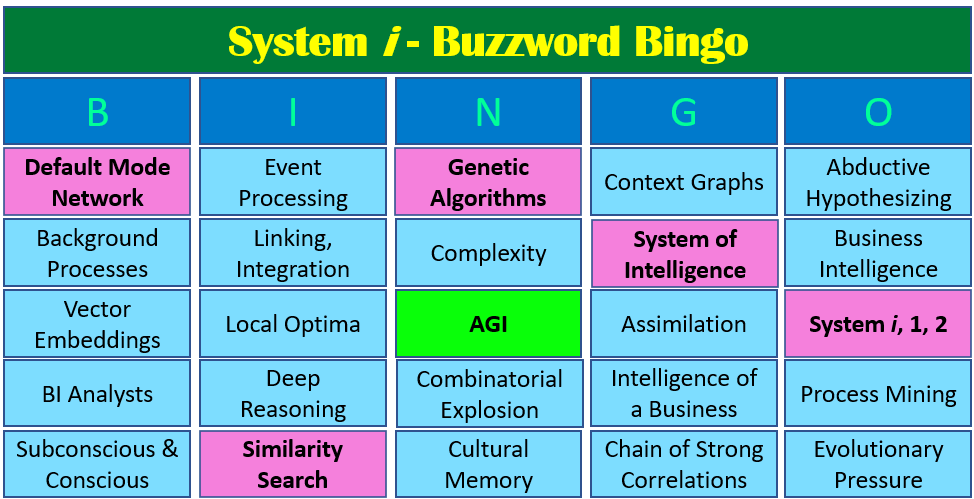
Abstract This blog introduces the Explorer Subgraph, a navigational knowledge structure designed to support System ⅈ (the ⅈ as in the imaginary number). I introduced System ⅈ a few weeks ago in my blog, System ⅈ: The Default Mode Network of AGI. The Explorer Subgraph is a background, always-on layer of intelligence that operates below conscious … Continue reading Explorer Subgraph—The Dynamic Cartography of Relation Space
System ⅈ: The Default Mode Network of AGI
Abstract: TL;DR Preface—The System ⅈ Origin Story For my AI projects back in 2004, SCL and TOSN, the main architectural concept centered on how I imagined our conscious and subconscious work. In my notes, I referred to the conscious as the "single-threaded consciousness". The single-threaded consciousness made sense to me because we have just one … Continue reading System ⅈ: The Default Mode Network of AGI
Context Engineering and My Two Books
“Context engineering” is emerging as the evolutionary step over prompt engineering. It's the deliberate design of everything an AI system can access before it produces an answer. The goal is to make it work on the right problem, with the right facts, under the right constraints. That is, by mitigating "context drift" as the AI … Continue reading Context Engineering and My Two Books
The Ghost of OLAP Aggregations – Part 2 – Aggregation Manager
This is Part 2 of a 3-part series where I make the case that pre-aggregated OLAP is essential in this era of AI. The intent of this post is to describe just enough of how a pre-aggregated OLAP engine works for those who are unfamiliar with this technology: Those who have joined the business intelligence … Continue reading The Ghost of OLAP Aggregations – Part 2 – Aggregation Manager
The Ghost of OLAP Aggregations – Part 1 – Pre-Aggregation
If your entry into the business intelligence (BI) game began after around 2010, it could be difficult to appreciate the value of OLAP cubes (referring mostly to SQL Server Analysis Services MD, ca. 1998-2010), those aggregations, and that MDX query language. In fact, you may have a negative impression of those relics, those "cubes", based … Continue reading The Ghost of OLAP Aggregations – Part 1 – Pre-Aggregation
BI-Extended Enterprise Knowledge Graphs
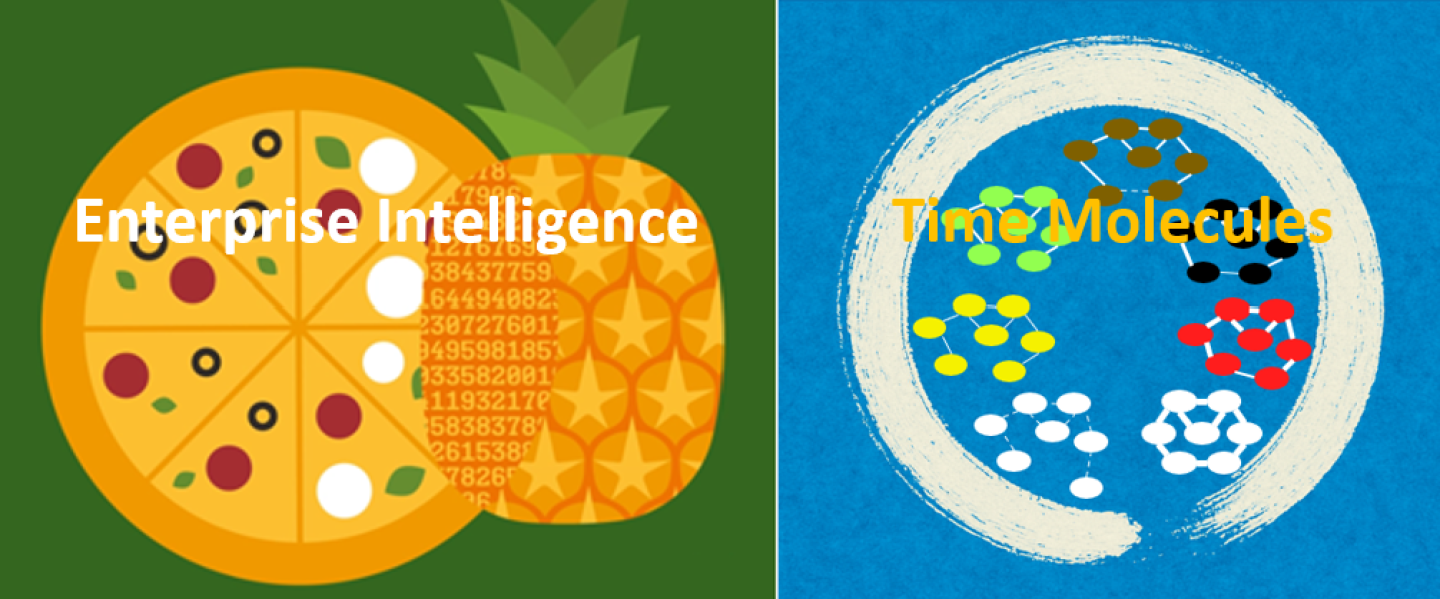
Enterprise Intelligence and Time Molecules link through the Tuple Correlation Web. Introduction The main takeaway of this blog is an explanation of how my two books, Enterprise Intelligence (June 21, 2024) and the more recently published Time Molecules (June 4, 2025), connect. Time Molecules is a follow-up to my first book, Enterprise Intelligence. It connects … Continue reading BI-Extended Enterprise Knowledge Graphs