Inductive Reasoning Meets Deductive Reasoning This article accompanies my new book, Semantic Webs of Meaning: Building Contextual Knowledge Graphs for Deduction and Integration published by Technics Publications. This is an extension to the topic, Machine Learning Models as Data Products, on page 173. In that topic, iris.py is an example of a Python program that … Continue reading Machine Learning Models in Knowledge Graphs
Month: August 2026
Insight Function Array: How the Insight Space Graph Notices, Remembers, and Connects
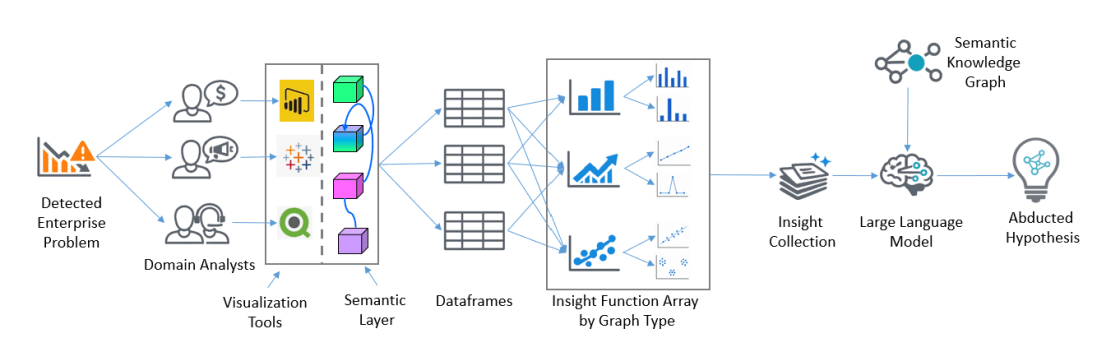
My 2024 book, Enterprise Intelligence, describes the Insight Space Graph (ISG), a graph database that records, maps, and connects the simple insights exposed through the everyday work of Business Intelligence (BI) analysts. Towards the goal of resolving business problems, analysts continually explore enterprise data through tools such as Tableau and Power BI, producing line graphs, … Continue reading Insight Function Array: How the Insight Space Graph Notices, Remembers, and Connects
When “Sedans Have Four Doors” Means Five Different Things in RDF
This post is related to my book, Semantic Webs of Meaning. Available on Technics Publications and Amazon. Use the code TP25 for a 25% discount if purchasing on the Technics Publications website. In your journey to building knowledge graphs, this is where knowledge graph people can start to sound like the "Comic book Guy" on the Simpsons … Continue reading When “Sedans Have Four Doors” Means Five Different Things in RDF
Trailer for My New Book: Semantic Webs of Meaning

Update August 25, 2026: The supplemental GitHub repo for the Semantic Webs of Meaning is live. The supplemental repo has these main purposes: Post material that is too down into the weeds for the book (ex. install instructions, full appendices, code samples, and tutorials) but is mentioned there. Enable me to expand upon and/or clarify … Continue reading Trailer for My New Book: Semantic Webs of Meaning

