A fascinating piece of research from MIT CSAIL recently caught my attention: Sparks of Weight-Space Programming: LLMs Can Natively Read & Write Neural Network Weights, published November 2, 2026, by Rikiya Takehi, Jayden Teoh, Alex Zhang, and Omar Khattab. The researchers explored whether an advanced LLM, GPT-6 Astra, could examine the weights of a neural … Continue reading Looking Inside the Function: From Neural Networks to Enterprise Intelligence

Category: Time Molecules
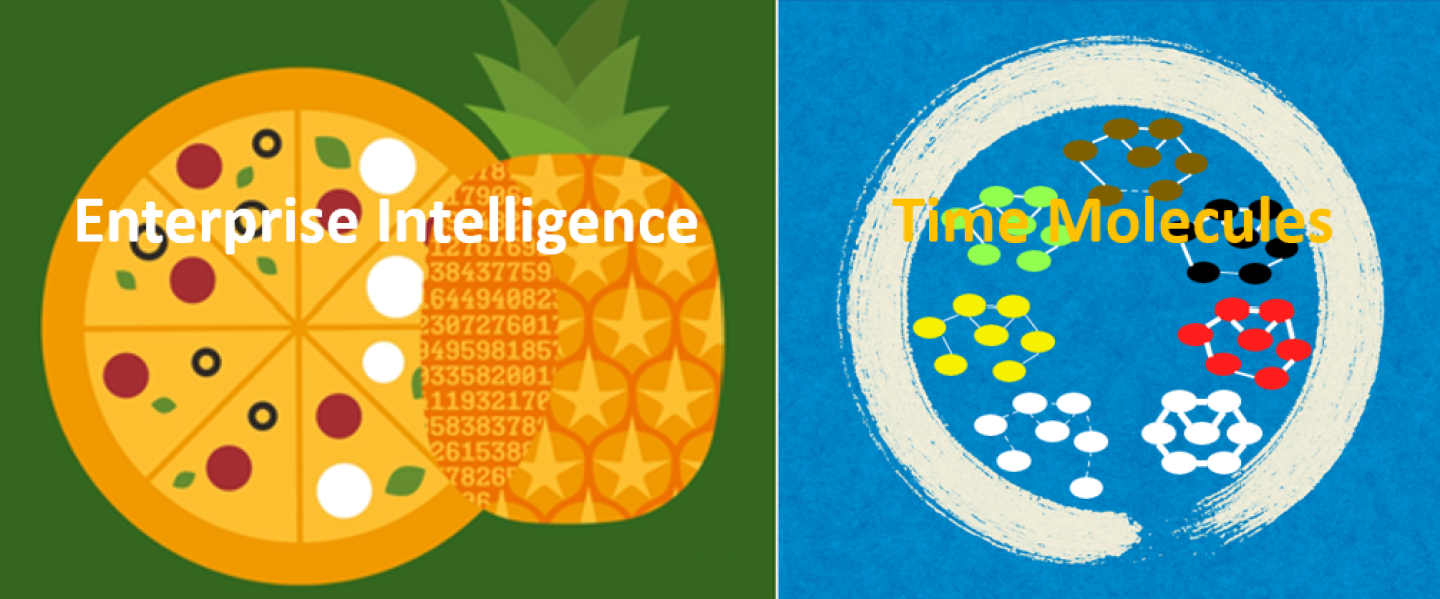
Collection of blogs related to my book, Time Molecules.
Stories, Analogies, Metaphors—the Layer After LLMs
I learned today that Patrick Stewart passed away a couple of days ago, on Oct 28. So this blog also serves as a tribute to the actor who played one of my favorite characters. TL;DR: of the Blog: Human intelligence does more than accumulate facts. We package experience into stories, compress stories into references and … Continue reading Stories, Analogies, Metaphors—the Layer After LLMs
Time Molecules 2026 Refresh/Update
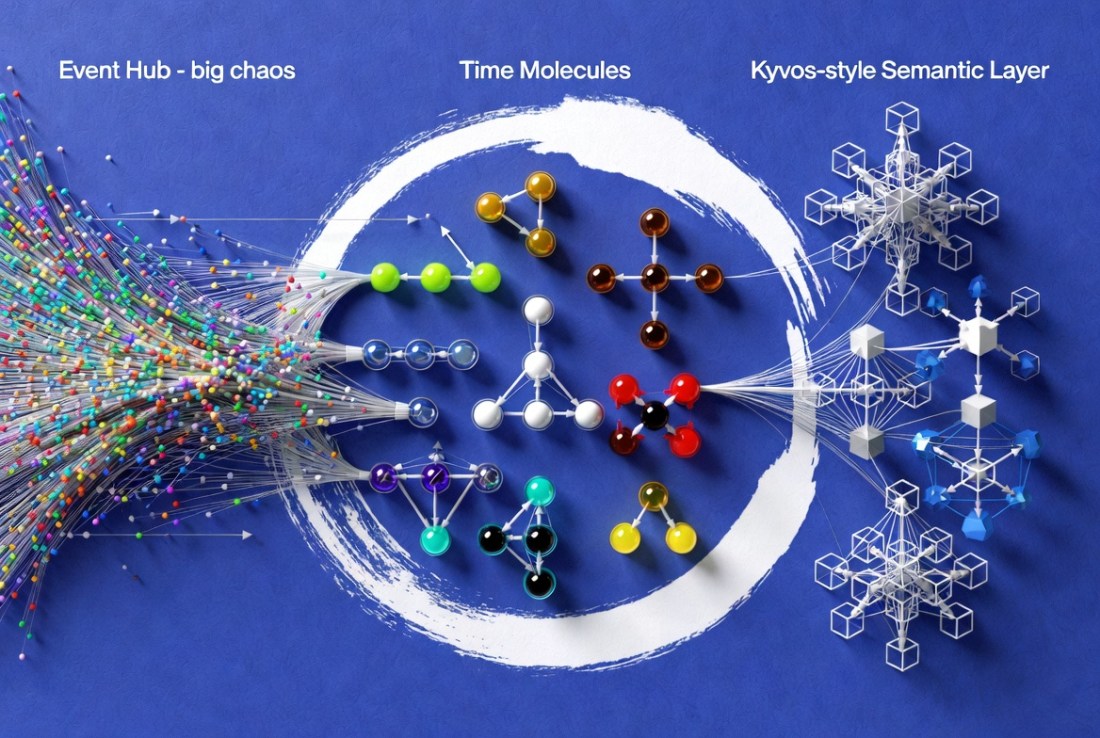
Today, May 15, 2026, is the launch of the Spring 2026 Refresh/Update of my book, Time Molecules, is available. This is not a new edition of the book, but a significant expansion of the material I've placed in its supplemental GitHub repository and this blog site. The refresh expands on the core ideas, strengthening the … Continue reading Time Molecules 2026 Refresh/Update
AI Agents, Context Engineering, and Time Molecules
Abstract AI agents are not just about producing answers—they are executing processes. If those processes emit events for each step, they can be studied the same way we study human and enterprise workflows. By capturing and analyzing these event streams, we can reconstruct the context behind agent decisions and understand how AI-driven systems actually operate … Continue reading AI Agents, Context Engineering, and Time Molecules
System ⅈ: The Default Mode Network of AGI
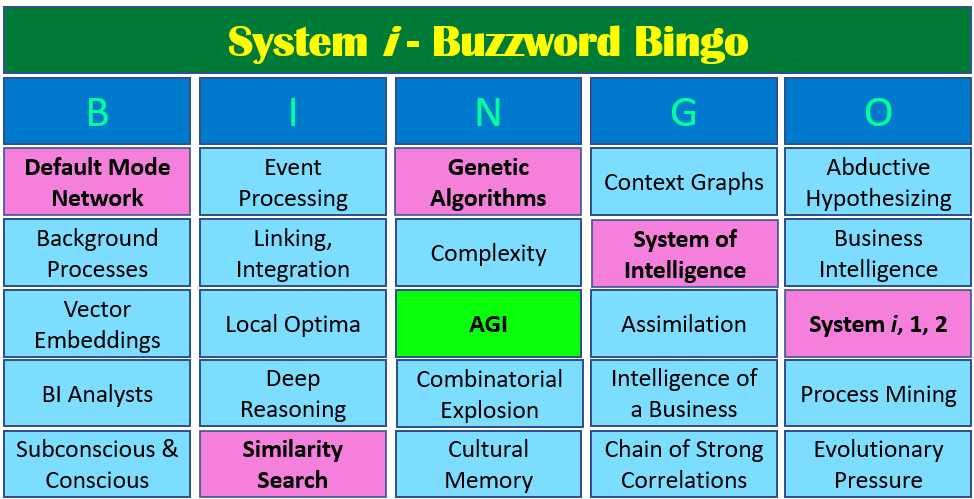
Abstract: TL;DR Preface—The System ⅈ Origin Story For my AI projects back in 2004, SCL and TOSN, the main architectural concept centered on how I imagined our conscious and subconscious work. In my notes, I referred to the conscious as the "single-threaded consciousness". The single-threaded consciousness made sense to me because we have just one … Continue reading System ⅈ: The Default Mode Network of AGI
The Complex Game of Planning
This is my final post for 2025, just in time for your holiday-season reading, ideally from a comfy chair next to the fireplace. It's food for thought for your 2026 New Year resolutions. So toss out that tired old "'Twas the Night Before Christmas" and read this new tale to the kids and grandkids. ✨🎄🔥📚☕❄️🎁 … Continue reading The Complex Game of Planning
Long Live LLMs! The Central Knowledge System of Analogy
Situation Over the past few months there has been a trend to move from referring to "large language models" (LLM) to just "language models". The reason for that is the recognition that small language models (SLM) have clear advantages under certain situations. So "language model" is inclusive of both. And of course, as soon as … Continue reading Long Live LLMs! The Central Knowledge System of Analogy
Context Engineering and My Two Books
“Context engineering” is emerging as the evolutionary step over prompt engineering. It's the deliberate design of everything an AI system can access before it produces an answer. The goal is to make it work on the right problem, with the right facts, under the right constraints. That is, by mitigating "context drift" as the AI … Continue reading Context Engineering and My Two Books
Stories are the Transactional Unit of Human-Level Intelligence
The transactional unit of meaningful human to human communication is a story. It's the incredibly versatile, somewhat scalable unit by which we teach each other meaningful experiences. Our brains recorded stories well before any hints of our ability to draw and write. We sit around a table or campfire sharing stories, not mere facts. We … Continue reading Stories are the Transactional Unit of Human-Level Intelligence
Reptile Intelligence: An AI Summer for CEP
Abstract Complex Event Processing (CEP) has long been dismissed as mere real-time infrastructure, yet it embodies the scalable, deterministic substrate that artificial intelligence has overlooked: a high-performance System 1 layer as described in Daniel Kahneman’s Thinking, Fast and Slow. System 1—fast, automatic, intuitive, massively parallel, and effortless—handles the overwhelming flood of sensory (or in enterprise … Continue reading Reptile Intelligence: An AI Summer for CEP