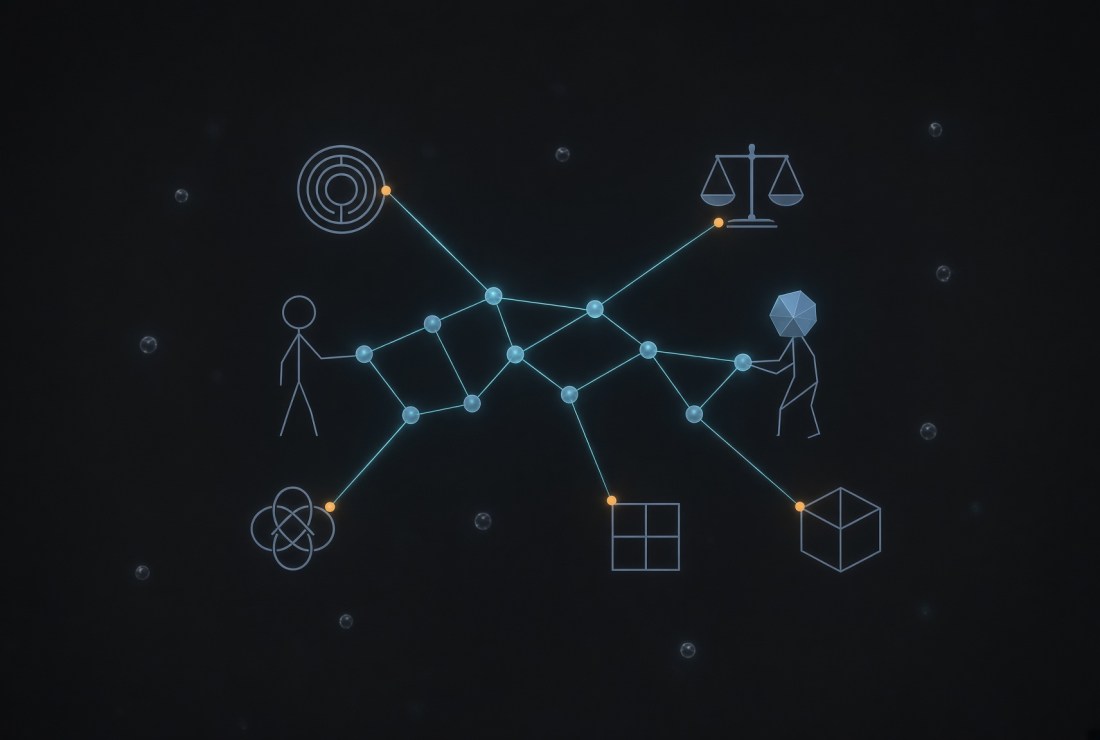
Reaching from the Realm of Information into the Realm of Knowledge
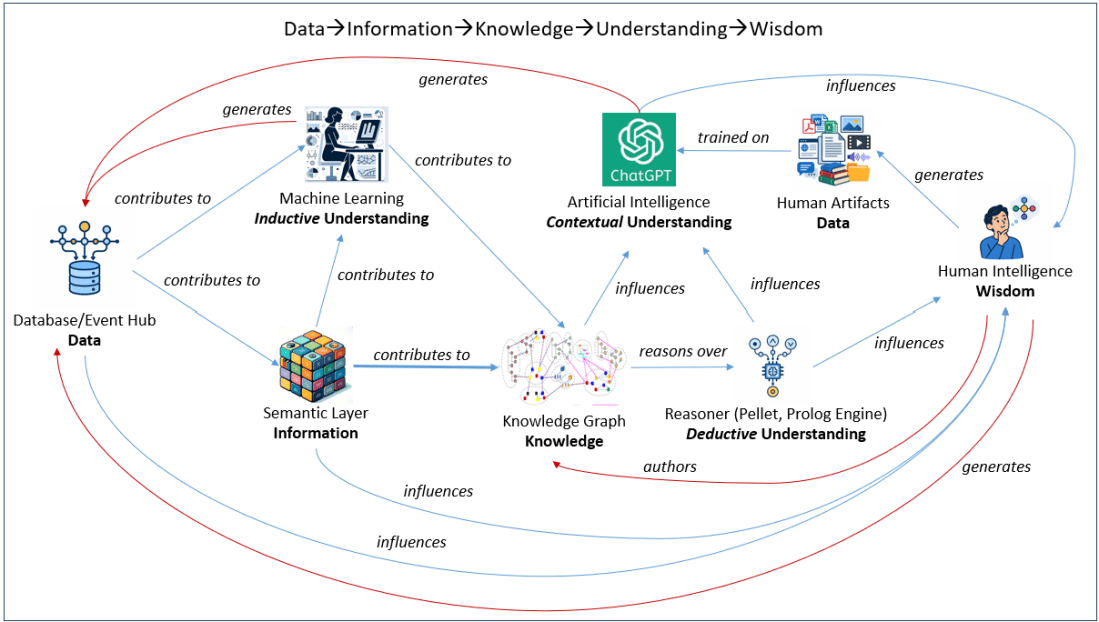
This blog is based on a "deleted scene" but is also an update to the technology mentioned in my book, Semantic Webs of Meaning—specifically Chapter 8 on scaling query performance for a knowledge-graph deployment. In that chapter I did not talk about the contribution a performance-oriented semantic layer (ex. Kyvos) can make. The book is … Continue reading Reaching from the Realm of Information into the Realm of Knowledge →
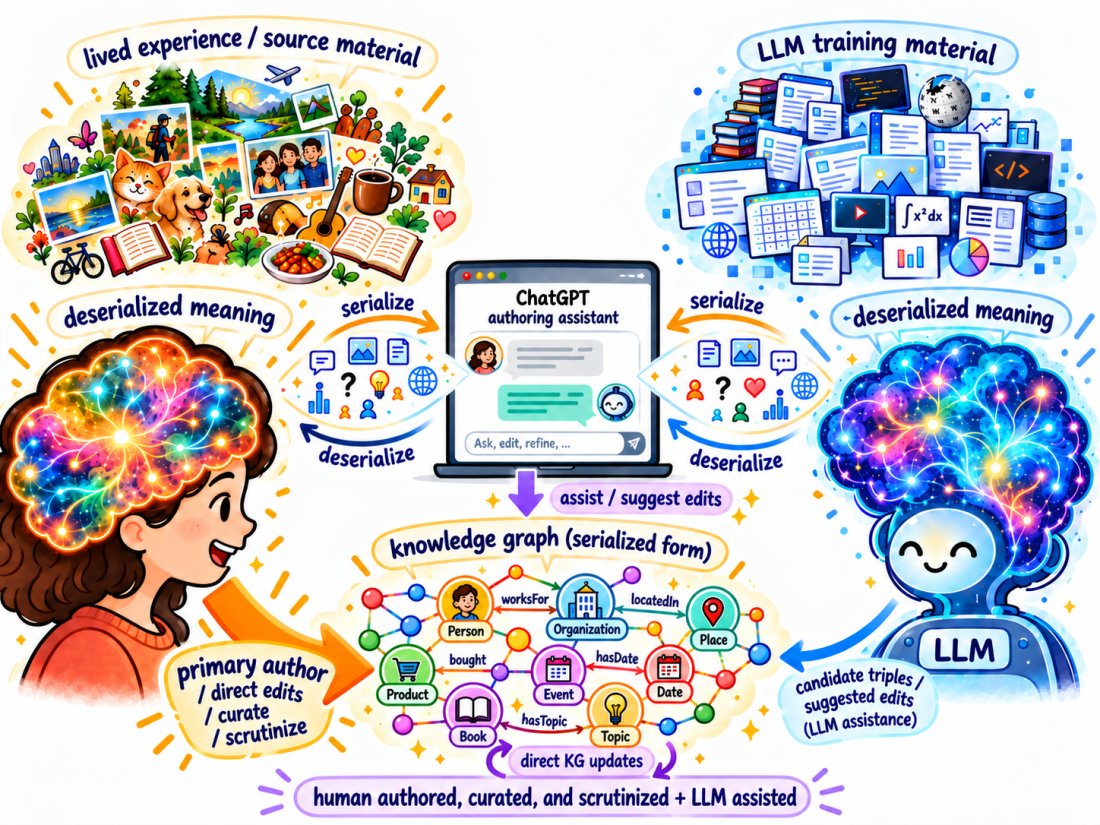
Symbols Travel, Meaning Is Rebuilt

TL;DR (Sort of) Since this TL;DR is relatively long for a TL;DR, here is the elevator pitch: Humans and LLMs live largely in rich, subsymbolic internal worlds. Knowledge graphs live in an explicit, serialized world. Intelligence increasingly depends on moving between the two—and continually checking that what was reconstructed still corresponds to what we meant. … Continue reading Symbols Travel, Meaning Is Rebuilt →

The Art of Crafting Competency Questions for Knowledge Graphs

Applying self-service BI concepts to knowledge graph development. This blog is from the “deleted scenes” of my book, Semantic Webs of Meaning, Technics Publications, 2026 (mostly Chapter 10). It is also a continuation of the competency questions discussion begun in Where Should an Enterprise Knowledge Graph Start? Competency Questions: TL;DR Competency questions ... Are natural-language questions … Continue reading The Art of Crafting Competency Questions for Knowledge Graphs →

Where Should an Enterprise Knowledge Graph Start?

I recently became aware of a stance on how to begin a knowledge graph endeavor that is somewhat contradictory to what I prescribe in Semantic Webs of Meaning. This is an important point to clarify. Here is the bullet-point summary: Different Stance: Do not infer what the ontology ought to be merely from the structures … Continue reading Where Should an Enterprise Knowledge Graph Start? →

Web of Functions (Transformations)

This article is a supplement to my new book, Semantic Webs of Meaning: Building Contextual Knowledge Graphs for Deduction and Integration published by Technics Publications (on Amazon) . This is an extension to the topic, Machine Learning Models as Data Products, on page 173. In that topic, iris.py is an example of a Python program … Continue reading Web of Functions (Transformations) →

KPI-First Probing of the Tuple Correlation Web

Note: From the “deleted scenes” of my book, Enterprise Intelligence, Technics Publications, 2024. This addresses a layered approach to building a Tuple Correlation Web (TCW), which can be massive in its full, enterprise-scoped manifestation. The TCW is primarily an Enterprise Intelligence structure, but it also belongs within the larger idea of my new book, Semantic Webs of … Continue reading KPI-First Probing of the Tuple Correlation Web →